
Prediction Markets Could Be Facing SCOTUS Losses in 2027, Says Analyst
Posted on: April 1, 2026, 11:22h.
Last updated on: April 1, 2026, 11:22h.

- Jefferies analyst breaks down four scenarios in which Kalshi could notch losses in Supreme Court losses
- He ranks the risks of Kalshi losing those cases as “medium,” “high” and “very high”
- He adds the high court is likely to hear prediction market cases in 2027
Crypto.com, Kalshi, Robinhood Markets (NASDAQ: HOOD) and other prediction market operators are engaged in a variety of state-level legal battles. Resolution could arrive as soon as next year if the Supreme Court of the United States (SCOTUS) takes up the cases, but the industry may not like the outcomes.
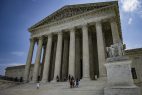
In a new report, Jefferies analyst David Katz says it’s “highly probable” that the high court takes up prediction market case(s) as soon as 2027, though it’s not yet clear which pending case SCOTUS will opt to hear. The research firm lays out four scenarios in which the court could hear prediction market cases and the projected outcomes largely favor the states. Katz starts with Nevada’s case against Kalshi in which the state argues federal preemption doesn’t allow a company to skirt state gaming laws.
In this scenario, SCOTUS takes the position that even though the CFTC is a federal entity, its oversight of the Prediction Markets does not supersede the claims of state gaming regulators that they have jurisdiction around gambling in their respective states,” observes Katz.
Citing the Supremacy Clause in Article VI of the Constitution, the analyst says it’s a “medium probability outcome” that the Supreme Court, assuming it hears this case, will side with Nevada. In late March, the First Judicial District Court of Nevada granted the Nevada Gaming Control Board (NGCB) a 14-day restraining order against Kalshi, which prohibits the yes/no exchange from offering sports event contracts in the state.
Massachusetts, Ohio May Also Be Problematic for Kalshi
Count Massachusetts and Ohio among the states pursuing litigation against Kalshi. In Massachusetts, congressional intent on sports event contracts is the central issue.
Kalshi, which has dealt with legal setbacks in the commonwealth, may leverage the “Chevron principle” to argue that the Commodities Futures Trading Commission (CFTC) has the authority to make various interpretations of the Commodities Exchange Act (CEA). That would open the door for sports event contracts to be permitted, but SCOTUS could see things differently.
“However, the 2024 SCOTUS ruling of Loper Bright Enterprises v. Raimondo invalidated the Chevron principle, handing the interpretive power back to the Judicial Branch as it relates to Congressional Intent,” notes Katz. “Given this development, it is possible that SCOTUS would decide that Congress did not intend for sports to be included at all in swaps as defined by the CEA.”
The analyst says it’s “high probability” that if the Supreme Court hears the Massachusetts case, it’d issue a ruling against Kalshi.
In Ohio, the case against Kalshi focuses largely on the definition of a swap. The heart of the matter is the economic utility of parlays, player propositions and other sports contracts that go beyond a yes/no on the outcome of a game or what team will advance to the Super Bowl.
“When examining player prop bets, over/unders, point spreads, parlays, etc. on games, SCOTUS could, in our view, easily strike down these bets as commercially inconsequential,” says Katz. “In our view, this argument would most likely be brought to SCOTUS from the OH vs. Kalshi case, as Judge Morrison of the Southern District of Ohio has already ruled that sports game outcomes do not directly affect commerce or commodity prices, thus permitting Ohio’s cease and desist order on Kalshi to take effect.”
The Jefferies analyst assigns a “very high” probability that if the Supreme Court hears the Ohio v. Kalshi that it will rule in favor of the state.
California Tribes Likely to Win
On the grounds that prediction markets threaten tribal sovereignty, tribal casino operators are also pursuing legal remedies against yes/no exchanges on the grounds that the Indian Gaming Regulatory Act (IGRA) of 1988 grants tribes exclusivity to regulate gaming on their land.
The California Nations Indian Gaming Association (CNIGA) is one of the most vocal tribal critics against Kalshi and Katz says a case brought by several tribal casino operators in the state is the most likely to raise IGRA questions, potentially leading to SCOTUS hearing the case.
“We believe that a tribal argument around sovereignty and gaming is the most ironclad legal obstacle that Prediction Market operators will likely face, and we expect that if the case were to rise to SCOTUS, a ruling that Prediction Markets would need to geo-fence around tribal land is highly likely,” says the analyst.
He assigns a “very high” probability that if the Supreme Court hears the California case, it will rule in favor of the tribes.
No comments yet