
IRS Releases Draft for $2,000 Slot Tax Threshold to Take Effect Jan. 1, 2026
Posted on: December 17, 2025, 07:57h.
Last updated on: December 17, 2025, 10:15h.

- The slot tax reporting threshold increases to $2,000 in 2026
- The current threshold of $1,200 has stood since 1977
After months of uncertainty, the Internal Revenue Service (IRS) has settled the debate on whether a tax provision of the One Big Beautiful Bill Act (OBBB) raised the tax reporting threshold for slot machine wins.
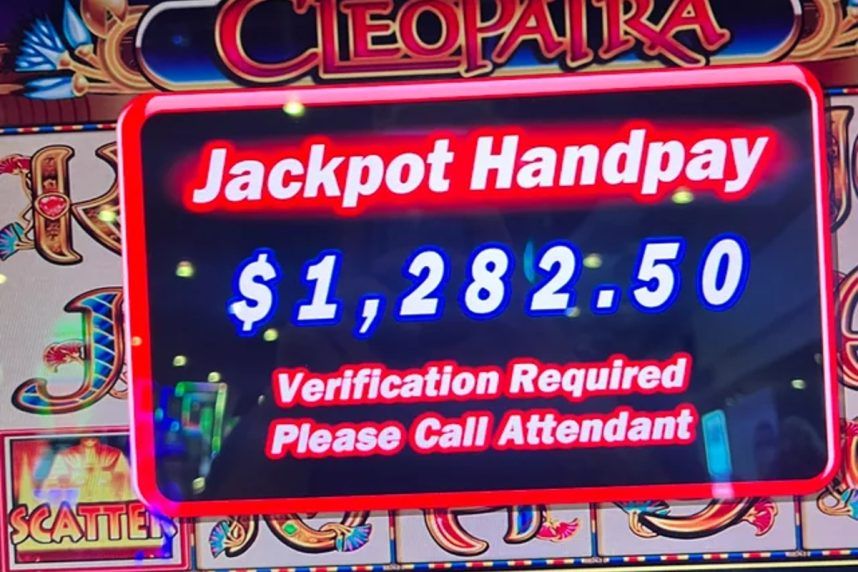
Since 1977, casinos have been required by the federal tax code to handpay slot wins for prizes of $1,200 or more. The player is issued a W-2G, a tax form to report gambling winnings, which is additionally filed with the IRS.
Beginning Jan. 1, 2026, the threshold will increase to $2,000. The threshold will then increase annually in perpetuity based on inflation.
For calendar years after 2025, the minimum threshold amount for reporting certain payments and backup withholding on certain information returns, including the Form W-2G, will be adjusted yearly for inflation. The minimum threshold amount for payments made in calendar year 2026 is $2,000,” the IRS explained in a draft for W-2G filings beginning in 2026.
The draft is implemented once it receives final approval from President Donald Trump’s Office of Management and Budget, which oversees the implementation of policies, budgets, management, and regulatory objectives.
Now, casinos across the country must begin reprogramming their slots to initiate handpays only when a machine hits for more than $2,000. They’ll gladly do it, as the gaming industry has for many years said the $1,200 threshold is outdated, creating a burdensome workload and requiring players to wait for a slot attendant to deliver their cash winnings and complete paperwork.
Slot Tax Threshold Increase
Tucked away in the Republicans’ tax and spending policies package was an increase to 1099-MISC filers that raised the threshold for reporting from $600 to $2,000. 1099-MISC forms deal with temp workers and independent contractors who are not employees.
It wasn’t initially clear if the procedural change to 1099-MISC applied to W-2G. In July, Casino.org got a hold of the Tax Law Center at NYU Law for clarification. Sophia Yan, an attorney-advisor at the Tax Law Center who previously served as a tax law clerk at the Senate Finance Committee, told us:
“I agree with the reading that the slot tax reporting threshold would essentially be raised from its current $1,200 threshold to $2,000 by OBBBA. Form W-2G implements the reporting requirements in the regulations at 26 CFR 1.6041-10, which define reportable gambling winnings at varying thresholds above $600 depending on the type of game. But these regulations implement Section 6041(a) of the Code, which requires reporting of ‘gains, profits, and income’ of $600 or more of the regulations,” Yan said.
“The change in the Section 6041(a) as a result of OBBBA appears to re-establish a floor of $2,000 for reporting of all types,” Yan explained.
Wins and Losses
While an increase, albeit a small one, to the slot tax threshold is welcomed by the gaming industry and its customers, another component of the OBBB could have a more consequential impact.
Beginning next year, the bill reduces the amount of losses a gambler can deduct against their winnings from 100% to 90%. The gaming industry and supporters of restoring the deduction back to 100% say the change will force gamblers to pay federal taxes on phantom income, as a person who wins $100K but also loses $100K at a casino throughout the year would still need to pay tax on $10K.
Nevada’s congressional delegation is spearheading bills in Congress to restore the gambling losses deduction.
Last Comments ( 3 )
Wins & Losses. If you win $100K but lose $120K is your deduction still limited to $90K or is it $100K?
Hi Wally, Great question. Here's what the tax pros at Reuters said. "Beginning in 2026, the 2025 Act limits gambling losses (for both professional and amateur gamblers) to 90% of the amount of such losses incurred during the year and then limits this amount to the extent of winnings [IRC Sec. 165(d)]. Example. Sam, who isn’t a professional gambler, goes to Las Vegas several times a year. In 2026, Sam wins $15,000 playing cards, but later in the year loses $20,000. The gambling winnings of $15,000 are reported as other income on Schedule 1 of Form 1040. Sam’s deduction for gambling losses is limited to the lesser of $18,000 (90% of the gambling losses) or the gambling winnings of $15,000. Therefore, Sam is allowed a $15,000 itemized deduction for gambling losses in 2026.
So, in your example, the person would qualify to deduct 90% of their $120K loss ($108K) against their winnings, so their deduction would be $100K.