
Bally’s Bull-Riding Bartender Role Draws Scrutiny in NJ Age Bias Case
Posted on: January 9, 2026, 09:04h.
Last updated on: January 9, 2026, 09:18h.

- NJ appeals judges weigh Bally’s “mechanical bull” bartender hiring requirements
- Older bartenders say performance-style job specs can disadvantage older applicants
- Bally’s argues some plaintiffs never applied, undercutting their claims
Should bartenders be judged on their ability to mix a mean mojito or on their mechanical bull-riding skills?
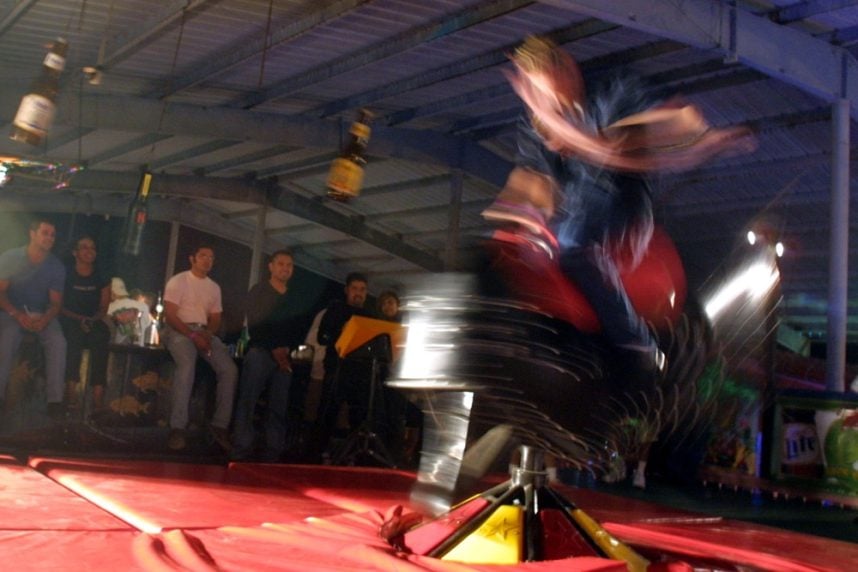
The question is now before the New Jersey Superior Court, Appellate Division, which is considering whether a Bally’s Atlantic City bar crossed the legal line by building physical stunts into its hiring process.
Cut the Bull
The case was filed by a group of 18 older bartenders who argue that the job description at a Bally’s Atlantic City bar — known as the Boardwalk Saloon when it opened in 2016 — effectively shut them out, not because they couldn’t nail a Negroni, but because the role had morphed into something closer to a performance.
In addition to being required to ride the aforementioned bucking machine, applicants were asked to perform choreographed dances, prepare flaming cocktails, and act as part entertainers, part social-media ambassadors.
The plaintiffs argue this had a disproportionate impact on older workers and violated New Jersey’s anti-discrimination law. Employees were also required to “maintain weight according to height,” which becomes more difficult with age, according to the complaint. Plaintiffs say BMI was monitored over time, not just at hiring.
Lawyers for Bally’s argued that the plaintiffs never formally applied for the jobs, and without an application, there was no legal claim. The plaintiffs already worked for Bally’s, so there was no need to “apply,” but they argue the allegedly ageist policy meant the shifts at the Boardwalk Saloon usually went to younger workers.
During oral arguments on Wednesday, the panel of judges pressed both sides on whether job ads can function as a deterrent, particularly if the requirements appear unrealistic or intimidating to certain age groups. One of the plaintiffs mentioned during the hearing is in his late 70s and ill-suited to rodeo-style performance, the judges noted.
Earlier Dismissal
A lower court previously dismissed the case, agreeing with Bally’s that the claims didn’t meet the legal threshold. The plaintiffs are now asking the Appellate Division to revive it, arguing that modern hiring practices shouldn’t be allowed to quietly sidestep age-discrimination protections.
If the appeals court backs the plaintiffs, the ruling could affect more than just casinos. Bars, restaurants, and entertainment venues increasingly sell an “experience” – and sometimes expect staff to embody it, especially in resort towns like Atlantic City.
The question is how far employers can push that idea before it starts excluding traditionally skilled workers who could otherwise do the job just fine.
The court has yet to issue a decision.
No comments yet