

Neon is Disappearing and Old-School Green Is Already Extinct

The Las Vegas doom-and-gloom narrative is mostly nonsense. The decline of neon is very real.
Since the mid-2000s, casinos have been replacing expensive, high-maintenance neon with LEDs. Deep sigh.
In the midst of that neon cataclysm, one color in particular has suffered most: green. It’s a whole thing.
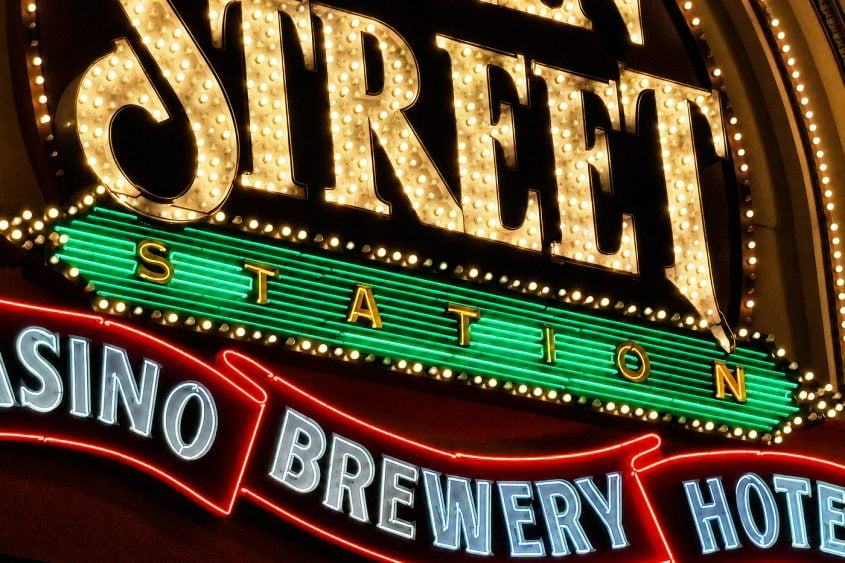
We recently noticed something odd about one of the glorious old-school neon signs at Main Street Station. Portions of the green neon had been replaced, but the new sections didn’t match the original tubing.
Our first assumption was obvious: The older tubes had simply changed color with age and the new tubes didn’t match.
Nope.
The problem is much more fascinating, especially for neon sign fans, and we are legion.
A classic shade of green neon has essentially disappeared because one of the phosphors used to make it is no longer available.
Yes, colors can go extinct.
We went down this neon rabbit hole thanks to a video from the Wall Street Journal. The video talks about the decline of neon in general, but especially green.
The Wall Street Journal chats with the folks at Voltarc, a company that has been making neon for about a century.
One type of green neon has already disappeared, according to the video, and Voltarc is trying to approximate the lost color using a new mixture of phosphors.
That helps explain what we’re seeing at Main Street Station.
The tubes are producing different shades of green because the materials used to make the original color aren’t being manufactured anymore.
A little mansplaining is required.
Most of what we call “neon” isn’t actually neon.
Actual neon gas produces that familiar reddish-orange glow.
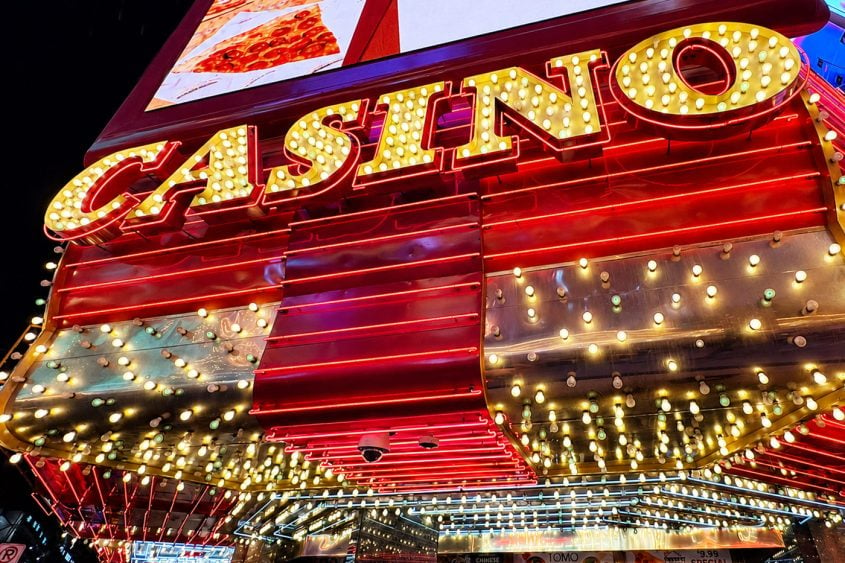
Other colors traditionally associated with neon signs are created using different gases, different types of glass and coatings (phosphors) inside the tubes.
The electrical discharge inside the tube produces ultraviolet light, which excites the phosphor coating. The phosphor determines what color we see.
The problem is the market for traditional neon has fallen off dramatically as LEDs have taken over.
LEDs are cheaper, easier to maintain and require a lot less specialized labor. Traditional neon requires glass tubes to be heated, bent by hand, coated, filled with gas, electrified and installed by people who know what the hell they’re doing.
As demand shrinks, so does the market for the obscure ingredients used to make neon tubing.
That’s what happened with green.
In 2023, neon manufacturer EGL announced the phosphor used to make its E-10 Green tubing had been discontinued by its supplier. EGL tried alternatives, but said it could not create a blend matching the original formula. The company ultimately introduced a replacement color called EGL Green II.
So, this isn’t a case of somebody at Main Street Station ordering the wrong color. The color no longer exists.
Green neon isn’t going away completely, it just doesn’t match the original green. That’s a swift kick to the argon for those who love historic neon signs.
This is the stuff that keeps the folks at the Neon Museum up at night. (They should be a little more concerned about the company they’re keeping. Long story.)
Beyond the color problem, there’s also a human problem. It’s not just the use of neon signs that’s tanked; so has the number of skilled people who make them.
Without demand, our fellow youths simply aren’t learning the tube-bending trade. (They’re also called “glass-benders.”)
Here’s a look at what’s involved in making a neon sign. We shot this video at a local neon shop, Paul’s Neon Signs.
Recently, casinos on The Strip have constructed larger and larger digital signs.
Casinos are definitely not engaged in a giant-screen dick-measuring contest.
Definitely.
These mammoth digital signs at Flamingo and Las Vegas Blvd. are 1) much larger than they appear, and 2) going to print money for Caesars Entertainment and/or Tilman Fertitta. pic.twitter.com/L8UwjvM0c7
— Vital Vegas (@VitalVegas) May 3, 2026
Aria: 250 feet. MGM Grand: 254 feet. Caesars Palace: 210 feet. Horseshoe: 180 feet.
Those massive digital screens can display every color imaginable, change messages instantly, show video and flood the senses with stimulation, and by that we mean ads.
But as the guy says in the video, “LEDs will never be as cool as neon.”
Neon is part of Las Vegas, and we should appreciate the neon signs we have while we can.
You can see classic neon at places like Flamingo (its plumage sign gets our vote for “Most Beautiful Neon Sign in the World”), El Cortez, Four Queens, Fremont, Binion’s, the aforementioned Main Street Station, California, Circus Circus, Golden Gate and Circa (we collectively owe the owners, the Stevens brothers, a debt of gratitude for restoring Vegas Vickie).
Neon has something pixels don’t: Soul.
Rage, rage against the dying of the light.
It’s a line from a poem by Dylan Thomas, fellow youths. He said we could borrow it.



Leave your thoughts on “Neon is Disappearing and Old-School Green Is Already Extinct”
4 Comments