
Here’s The Latest on Kalshi Resolving Ayatollah Khamenei Death to Previous Price, Traders Receive Credits for Net Losses
Posted on: March 2, 2026, 07:47h.
Last updated on: April 9, 2026, 07:20h.

- Kalshi is on the defensive for its market contracts involving the fate of Ali Khamenei
- The Iranian supreme leader was assassinated on Saturday
- His death resolved trading contracts to prices before the US-Israeli attacks
Kalshi is facing a mutiny of backlash after the prediction market resolved market contracts asking if Ayatollah Ali Khamenei, the Supreme Leader of Iran, would be “out” by a certain date to trading prices before the US-Israeli attacks.
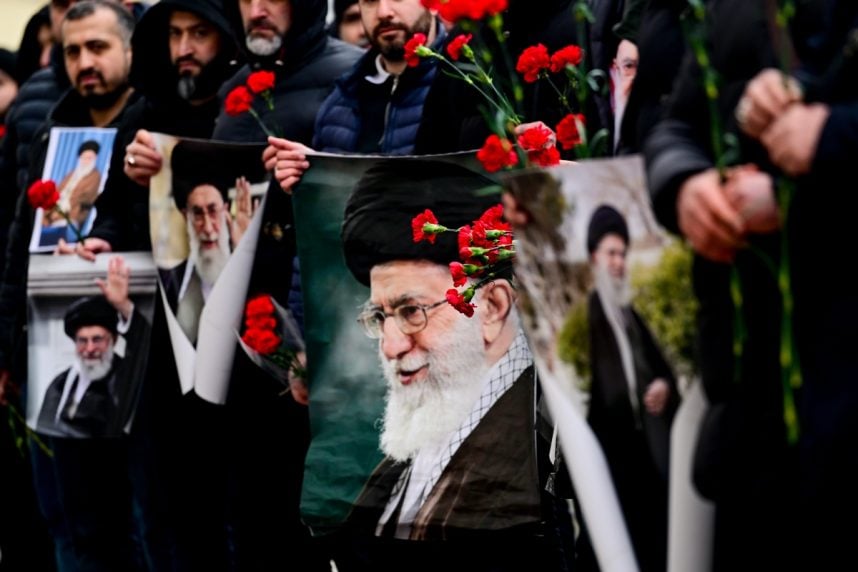
The United States and its partner forces, chiefly Israel, began striking Iran at 1:15 a.m. EST on Saturday. Targets included Islamic Revolutionary Guard command and control facilities, including the Leadership House, Khamenei’s compound.
Later Saturday, it was announced by the US government, and later confirmed by Iran, that Khamenei had been killed in the air attacks. Kalshi traders who had wagered YES on whether the ayatollah would be stripped of his powers thought they’d receive $1 per owned share. Instead, they were paid out based on the “last traded price” before the attacks began.
As financial instruments regulated by the Commodity Futures Trading Commission, prediction markets are prohibited from offering event contracts involving terrorism, assassination, and war.
Kalshi on Defensive
As the US moved closer to launching attacks on Iran, an opportunity the Trump administration said arose from the Twelve-Day War last June that greatly damaged Iran’s military and nuclear facilities, Kalshi bettors wagered on Khamenei no longer being in power. Kalshi itself heavily marketed the contracts, which set various deadlines for the ayatollah’s removal, including March 1.
Before the early Saturday morning attacks, shares of Khamenei being ousted by March 1 were trading at just 9 cents. With his death confirmed on Feb. 28, traders assumed their YES shares would be redeemed at $1. Instead, shares in the market that had more than $54.5 million in trading volume were resolved at 9 cents.
Kalshi’s fine print on the Ali Khamenei market advised that if the Iranian supreme leader were to die, the market would “determine payouts to the holders of long and short positions based upon the last traded price prior to death.”
Kalshi conceded that the rules were “grammatically ambiguous” and that similar contracts in the future will be better explained.
Kalshi cofounder and CEO Tarek Mansour remains on damage control, as many users say they’ve been wronged.
The death carveout and settlement based on last-traded-price were part of the published market rules from the outset. Traders were paid based on the last traded price. Some traders who held YES feel like they should have won (as in the market should have settled to YES). But the rules clearly stated that the market would not settle to YES in the event of death: traders expect us to settle the market based on the rules and we have to apply the rules consistently for both YES and NO holders; changing settlement because one side is unhappy would break trust in the exchanges,” Mansour wrote on X.
“We will improve. We learned a lot from this market… The best part about Kalshi is you all, and I’m sorry for the disappointment,” Mansour said.
Kalshi critics questioned why the platform ran the Khamenei in the first place if death wasn’t a legitimate option to settle the contract fully.
“Ah, yes, a dictator was going to willfully step down,” read one X comment. Another questioned if Kalshi was running odds on the allytollah losing in a “snap election?”
Traders Credited
Countless YES bettors voiced their frustrations with the contract resolving to less than $1.
One user, who bought $303.90 worth of YES shares of Khamenei being ousted by March 1 at 6% implied odds, posted a screenshot showing he was to receive $4,588 should the market have resolved at $1. Instead, he was paid $91.76.
Kalshi is reimbursing all fees and net losses from trading in the market. Impacted traders can find their credits under “Your activity” on the app and website.
“Kalshi did not profit on this market. We do not stand to benefit from one resolution or the other. We earn fees from facilitating trades. For this market, we reimbursed all fees back to users. We also reimbursed net losses users incurred on the market out of pocket, so no trader ended net negative. As a result, Kalshi incurred a substantial loss to make users whole,” Mansour concluded.
No comments yet