
CFTC Intervenes in Prediction Markets Litigation, Chair Claims States Encroaching on Federal Regulation
Posted on: February 17, 2026, 07:34h.
Last updated on: March 13, 2026, 08:37h.

- The CFTC is intervening in federal litigation regarding prediction markets
- CFTC Chair Michael Selig supports allowing prediction markets to trade sports event contracts
Despite a plea from Senate Democrats asking the United States Commodity Futures Trading Commission to stay out of litigation regarding prediction markets, the chair of the independent federal agency says the CFTC is filing a friend-of-the-court brief today in support of Crypto.com in the Ninth US Circuit Court of Appeals.
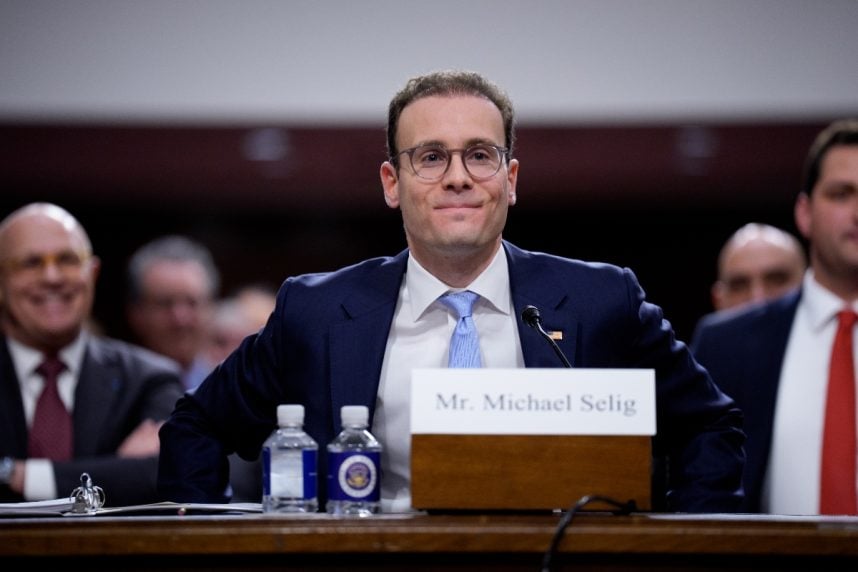
CFTC Chair Michael Selig is planning to rewrite the regulatory rules on prediction markets to solidify that the trading platforms can facilitate the buying and selling of sports events. Selig is also intent on formalizing that prediction markets can offer trading on political outcomes.
State attorneys general, lawmakers, and gaming regulators argue that prediction markets offering sports contracts are engaged in illegal sports betting. They cite CFTC Regulation 40.11, a rule standing for more than 15 years, that says the Commodity Exchange Act prohibits prediction markets from offering event contracts involving any form of gambling.
Selig says it’s time to modernize the rules that support “lawful innovation.”
Selig Op-Ed
Writing an op-ed in the Wall Street Journal, Selig, President Donald Trump’s CFTC appointee who took over the agency in December, said states have waged attacks on the agency’s authority to regulate prediction markets as financial instruments.
“Well-known CFTC-registered exchanges used by tens of millions of Americans, including Kalshi, Polymarket, Coinbase, and Crypto.com, face an onslaught of state-driven litigation across the country, with nearly 50 active cases presenting a range of legal challenges,” Selig wrote.
The most common allegation is that these contracts are a form of gambling and therefore subject to state laws. The CFTC will no longer sit idly by while overzealous state governments undermine the agency’s exclusive jurisdiction over these markets by seeking to establish statewide prohibitions on these exciting products,” Selig continued.
The CFTC boss says Congress gave the agency broad jurisdiction through the Commodity Exchange Act to determine what constitutes a commodity and that the law is “designed to account for financial innovation.”
“Event contracts serve legitimate economic functions. They allow businesses and individuals to hedge event-driven risks, enable investors to manage portfolio exposure, and provide the public with information about the outcome of future events. Farmers can manage risk related to temperature changes that may affect crops, and small-business owners can hedge against tax increases or energy-price spikes,” Selig wrote.
Casino Concerns
The pressing question among opponents who don’t think the outcome of an NFL game should be considered a commodity is, “Where does this all end?”
If the CFTC can justify that trading on how many points a college basketball team will score is a valid futures event contract, couldn’t the federal agency also reason that trading on the outcome of whether the next spin of a roulette wheel lands on black or red is legitimate? What about if a slot machine wins or loses, or an automated blackjack hand beats the dealer, or a simulated baccarat hand wins or loses as the banker or player?
No comments yet